ZINIO - Magazine Newsstand
- 4.3
- Rating
- 50.00M
- Installs
- Free
- Price

 Analysis by App-foxy
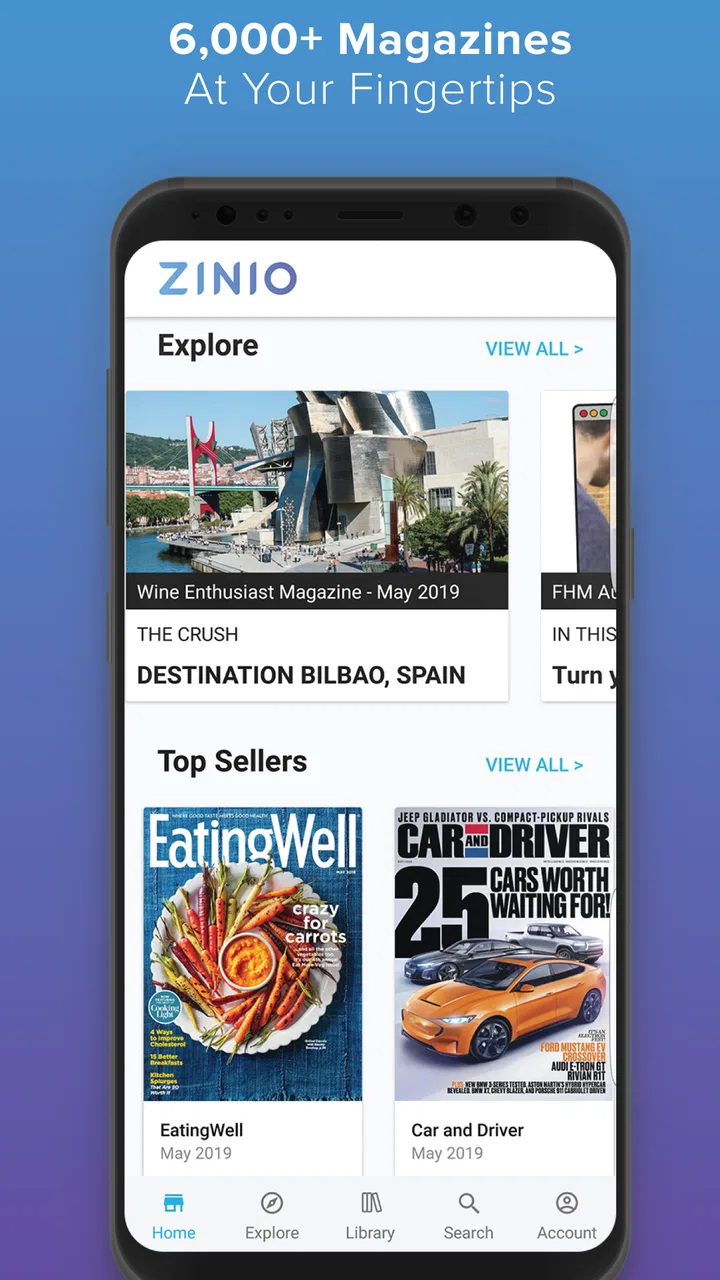
I have always liked the idea of carrying a small library of magazines without filling a bag with paper, and ZINIO - Magazine Newsstand is built around exactly that habit. Developed by ZINIO, this free News & Magazines app gives readers a digital place to browse and read magazine content on a phone or tablet. I found it most appealing when I wanted a focused read during a commute, a quiet evening, or a short break rather than another endless stream of quick updates.
The important distinction is that “free” describes the app itself, not every magazine or issue inside it. You can install it without paying for the download, while individual reading choices can involve in-app purchases ranging from $0.49 to $399.99 per item. That wide range makes it especially important to check what you are selecting before confirming a purchase. In my experience, ZINIO works best when treated as a digital newsstand: a convenient storefront and reading space where some content may be available at no extra cost and other content is paid.
How ZINIO works as a digital magazine shelf
The basic appeal is simple. Instead of visiting several publisher websites, searching an app store for separate magazine apps, or keeping physical copies around the house, I can use one reading destination for magazine discovery. That makes the app feel different from a standard news reader. News apps usually prioritize a constantly changing feed, while ZINIO is organized around magazine-style reading, where an issue has a beginning, a visual identity, and longer articles designed to be enjoyed at a slower pace.
You May Also Like

 AccuWeather: Weather Radar
AccuWeather Review: A Quick, Clear Forecast for Everyday Decisions
For everyday plans, the best forecast is the one you can understand quickly. AccuWeather makes rain timing, radar, and local conditions easy to act on, with a few trade-offs.

 Hill Climb Racing
Why Hill Climb Racing Still Turns Crashes Into One More Run
A tiny car, a bumpy hill and one more upgrade: Hill Climb Racing keeps resurfacing because its simple chaos makes every near-miss feel personal.

 AliExpress - Shopping App
AliExpress Makes Global Shopping Feel Personal, but Shoppers Bear the Risk
AliExpress turns a global marketplace into a pocket-sized discovery engine. Its reach is useful, its shopping loop compelling, and its trade-offs easy to miss.

 Lords Mobile: Kingdom Wars
Lords Mobile Is a Kingdom-Building Routine, Not a Quick Match
A case-by-case verdict on the building, battles, device demands, and social commitments that make Lords Mobile rewarding for some players and exhausting for others.

 PDF Scanner app - TapScanner
TapScanner Makes Paperwork Easier to Capture, Check, and Share
TapScanner makes scanning with a phone feel less like a rescue operation and more like a dependable step in getting work done. Its capture tools are useful, though not flawless.

 Block Blast!
 Shows How Much a Puzzle Game Can Leave Out
A quiet grid game shows why puzzle players increasingly value instant clarity, repeatable skill and low-pressure play—and where the genre still needs to catch up.
More From Our News Desk
View All News


That difference matters if you prefer deliberate reading over rapid headlines. I can open the app with a specific intention, such as looking for travel ideas, technology coverage, cooking inspiration, or general-interest features, and spend time with one publication instead of jumping between dozens of unrelated alerts. It is also a more natural fit for readers who still enjoy the structure of a magazine but do not want to store printed issues.
The app has been available since May 30, 2011, and its long presence helps explain why it feels like an established newsstand rather than a temporary reading experiment. Its current version is 4.76.1, and it supports devices running Android 5.0 or later. Those details are useful if you are installing it on an older Android phone or tablet: compatibility may be broad, but the actual reading experience will still depend on your screen size, storage, and how comfortable you are reading pages digitally.
Its audience is substantial. ZINIO shows an average rating of 4.3 from around 58 thousand ratings, with roughly 5 thousand written reviews, and it has passed 50 million installs. I would not treat those figures as proof that every reader will enjoy it, but they do suggest that the app has reached well beyond a small group of magazine enthusiasts. The Teen content rating is another practical detail for families: it signals that the app is intended for teen users and older, rather than being positioned as a children’s reading service.
What you actually get without confusing the price
The first thing I would explain to a friend is that installing ZINIO costs nothing, but the app is connected to paid digital reading. That is not a flaw by itself; a magazine newsstand needs a way to sell issues and subscriptions. The mistake would be assuming that a free installation means the complete catalog is free. The displayed purchase range, from $0.49 to $399.99 per item, shows that the financial commitment can vary dramatically depending on the content selected.
I would therefore use the free download as a way to inspect the reading environment and browse available choices, not as a promise of unlimited access. Before buying, I would look carefully at whether the selection is a single issue, a larger package, or another type of digital purchase. I would also pause when an offer appears unusually expensive, because the upper end of the listed range is significant enough to deserve deliberate checking rather than a quick tap.
This makes ZINIO more flexible than a single fixed-price subscription, but also less predictable for someone who wants one simple monthly bill. A dedicated magazine app or a publisher’s own subscription may be easier to understand if you already know exactly which publication you want. ZINIO has greater discovery value when you are open to exploring, while a direct publisher option can be cleaner when your reading is limited to one title.
There is also a difference between financial value and convenience value. Even when a digital issue costs money, the app may still save shelf space and make back issues or regular reading easier to manage. On the other hand, readers who already receive their favorite magazines through another subscription may gain little from paying again in a second storefront. I would compare the total cost of your existing reading habits before treating the catalog as a bargain.
Where the app delivers real value
For me, the strongest benefit is concentration. A physical magazine has fewer distractions than a social feed, and ZINIO preserves some of that feeling while keeping the reading material on a device. When I want to spend twenty minutes with a feature rather than consume ten short posts, the format encourages a better pace. That is a meaningful advantage for anyone who feels overwhelmed by constantly refreshed news apps.
The second benefit is portability. A reader who travels, commutes, or moves between home and work can keep magazine reading in one place instead of carrying several paper issues. A phone is convenient for a quick article, while a tablet is usually more comfortable for a full issue with photography, charts, and designed pages. I would not claim that every screen is equally pleasant, but the digital format is particularly useful when physical storage and carrying space are limited.
Discovery is another reason to try it. If you only use a publisher’s own app, you are naturally guided toward that publisher’s catalog. A newsstand approach makes it easier to compare different magazine interests from one reading environment. That can be valuable for someone whose tastes change from month to month: perhaps technology one week, travel the next, and food or culture after that. The trade-off is that browsing can encourage impulse purchases, so I would decide on a reading budget before exploring deeply.
A realistic everyday scenario would be a commuter who has a few quiet train rides each week but does not want to carry a backpack full of magazines. They could install the free app, browse during a weekend, choose only the issues that genuinely match their interests, and read them later without relying on a paper copy. If the commuter is already paying for a print subscription that includes digital access elsewhere, however, adding another purchase through ZINIO may not make financial sense.
Three useful habits that improve the experience
My first practical tip is to separate browsing from buying. I would explore the catalog when I have time, make a short mental or written list of titles that genuinely interest me, and return to the purchase screen later. This avoids confusing curiosity with long-term value. Magazine storefronts are designed to make discovery enjoyable, but not every attractive cover deserves a place in your reading queue.
Second, I would choose the device according to the type of issue. A phone is fine for checking a particular article or reading during a short wait, but a tablet is a better match for pages that depend on layout, images, or small text. This is not a hidden technical feature; it is a reading-workflow decision that can change whether digital magazines feel comfortable or tiring. If your main device has a small display, test your tolerance with shorter sessions before committing to several purchases.
Third, I would treat each purchase as part of a personal reading plan. Instead of buying because a cover looks interesting, ask whether you will read enough of the issue to justify the cost and whether you want a one-time read or a recurring habit. The broad in-app purchase range makes this especially important. A low-cost individual selection may be easy to justify, while a high-priced package deserves comparison with other ways of accessing the same publication.
A fourth habit is to use the app as a replacement for clutter, not as an excuse to collect more unread material. Digital shelves can hide the same problem as physical shelves: buying feels productive even when reading time never appears. I would keep the number of active issues small and finish or abandon them consciously. That approach makes the app feel like a reading tool rather than a shopping catalog.
Where the trade-offs become noticeable
The most obvious limitation is the separation between the free app and paid content. Someone expecting a completely free magazine library may be disappointed. The app is free to install, but the purchase system means that the real cost depends on what you choose. Because the displayed range reaches from cents to several hundred dollars per item, I would never approve a purchase without reading the offer carefully.
Another trade-off is that digital reading does not perfectly reproduce paper. A phone can make magazine pages feel cramped, and a tablet may be less convenient to hold for a long session. Some readers also prefer the physical sensation of turning pages, marking articles, or leaving a magazine on a coffee table. ZINIO is a strong answer to portability and storage, but it is not automatically a better answer for someone who values the physical object as much as the content.
The app may also be a poor fit for people who want breaking news first. Magazine issues are generally built around edited, substantial reading rather than minute-by-minute updates. If your priority is live headlines, local alerts, or rapid coverage of developing events, a dedicated news application will probably serve you better. ZINIO is more suitable when you want context, features, and a calmer reading session.
There is a similar issue for readers loyal to one publisher. If you already know the exact magazine you want and its publisher offers a clear direct subscription, the separate publisher route may be simpler. ZINIO earns its place when its broader newsstand approach saves you effort or helps you discover titles you would not otherwise consider. If you never browse beyond one publication, that advantage becomes less important.
I would also avoid judging the app solely by its rating. A 4.3 average is encouraging, and the large install base shows broad interest, but ratings combine different expectations. One person may be reviewing the convenience of digital access, while another is reacting to a particular purchase or reading experience. The more useful question is whether your priorities match the app’s strengths: magazine discovery, portable reading, and a mix of free installation with optional paid content.
Who is likely to get the most from it
ZINIO is a good match for readers who enjoy several kinds of magazines and want one place to explore them. It is also useful for travelers, students, commuters, and people living in smaller spaces where paper storage is inconvenient. If you like reading longer articles but do not want the endless movement of a general news feed, the magazine format gives you a more focused alternative.
I would recommend trying it to someone who is curious about digital magazines but has not yet decided whether to commit to a particular publication. The free installation lowers the barrier to exploring the interface and catalog. The key is to remain selective once paid choices appear. Use the app to discover your reading pattern first, then spend only when a title or issue clearly fits that pattern.
It is less suitable for a person who wants every article free, needs live news alerts, or expects one subscription to cover everything. It is also not the most obvious choice for someone who already has digital access through a print subscription or a publisher’s own service. In those situations, ZINIO may duplicate access rather than improve it.
Families should also keep the Teen rating in mind. That does not mean every magazine is identical in tone or subject, so I would still make reading choices thoughtfully rather than assuming the rating answers every suitability question. For personal use by teens and adults, the rating is a useful general guide; for younger children, I would choose a service designed specifically for children’s content.
My verdict on the free download and paid reading
After looking at the app as both a reader and a buyer, I see ZINIO as a practical digital newsstand rather than a universal free magazine service. The free installation is worthwhile if you want to browse magazine choices, reduce paper clutter, and read longer-form content on a mobile device. Its value becomes strongest when you use the catalog selectively and choose purchases that you are genuinely likely to read.
I would recommend it to a friend who wants variety and portability, with one clear warning: do not confuse access to the app with unlimited access to its content. Check each purchase, especially when the displayed price is much higher than the cost of a single issue. If you prefer one publisher, live news, or a predictable subscription, another option may be a better fit.
My final recommendation is to install ZINIO for exploration, then buy cautiously and intentionally. The app has the reach and maturity expected from a service that has been available since 2011, and its 50-million-plus installs show that the format works for a large audience. Still, the best experience comes from matching it to the right habit: focused magazine reading, not instant headlines and not automatic unlimited access. For that specific purpose, ZINIO - Magazine Newsstand is a useful choice, provided you keep the difference between free installation and paid reading firmly in mind.
FAQs for ZINIO - Magazine Newsstand
01What is ZINIO - Magazine Newsstand, and what can I read on it?
ZINIO is a digital magazine platform that lets you browse, purchase, and read magazines on a smartphone, tablet, or other supported device. Its catalog covers many subjects, including technology, lifestyle, fashion, business, sports, travel, science, and entertainment. Availability can vary by country, publication, and language, so it is worth checking the catalog in your region before subscribing or buying an issue.
02Does ZINIO require a subscription, or can I buy individual magazine issues?
ZINIO generally supports both individual purchases and subscription options, although the choices depend on the specific magazine and market. Buying a single issue can be useful if you only want occasional content, while a subscription may provide better value for regular readers. Before confirming payment, review the renewal terms, billing frequency, introductory pricing, and whether the subscription renews automatically.
03Can I read ZINIO magazines offline after downloading them?
In many cases, purchased issues can be downloaded for offline reading through the ZINIO app. This is convenient when traveling, commuting, or using a limited data connection. You normally need to download the issue while connected to the internet and remain signed in to the correct account. Storage requirements can vary, especially for magazines containing many images or interactive features.
04Can I access my ZINIO purchases on multiple devices?
ZINIO is designed to let users access their digital library across supported devices after signing in with the same account. This can include phones and tablets running compatible versions of Android or iOS. Your library and reading progress may synchronize, but the exact experience can depend on the publication and app version. Check device compatibility and account settings before making a large purchase.
05Are ZINIO subscriptions easy to cancel, and are refunds available?
Cancellation and refund policies depend on where the subscription was purchased. If you subscribed through Google Play or the Apple App Store, cancellation is usually managed through that store’s subscription settings rather than directly inside ZINIO. Cancelling normally prevents future renewals but may not provide an automatic refund for the current billing period. Always review the applicable store and ZINIO terms before subscribing.
Pros
- Large catalog of magazines and newspapers from many countries.
- New issues are often available on the same day as print editions.
- Offline reading lets you enjoy downloaded issues without an internet connection.
- Adjustable text view improves readability on supported magazine titles.
- Purchases and subscriptions can sync across compatible devices.
Cons
- Many popular publications require separate subscriptions or one-time purchases.
- Some magazines have limited interactive features compared with their print versions.
- Large downloads may use considerable storage space and mobile data.
- The reading experience can vary noticeably between different publishers.
- Account or subscription management may feel confusing for new users.

ZINIO - Magazine Newsstand
Gallery